

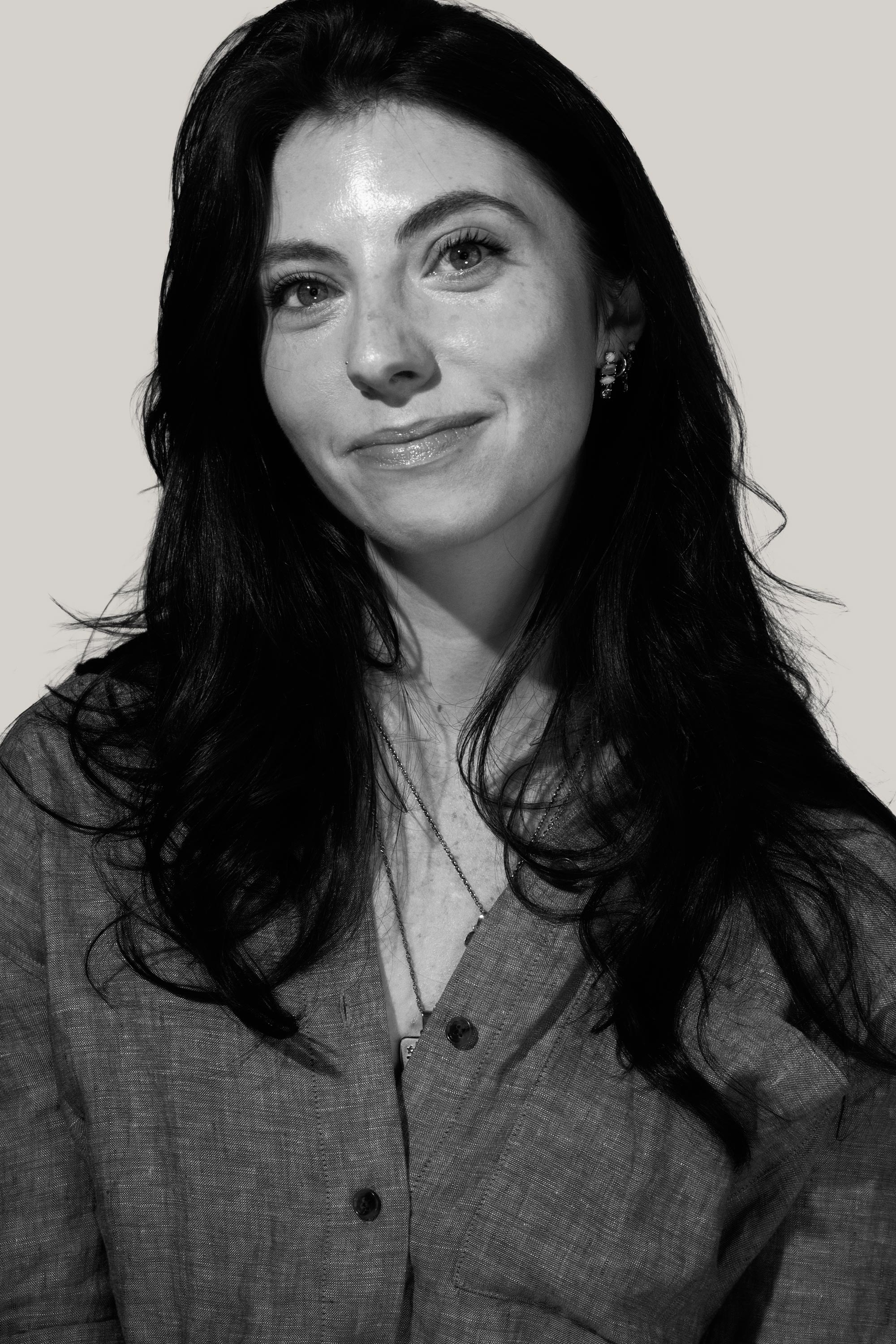
If you try to draw a straight line through Allison Peden’s career, it doesn’t really work.
She studied international affairs and business administration at the University of Georgia with a minor in communication studies. After graduating, she moved into nonprofit work and spent time as a youth pastor. This career path provided work that was structured, people-focused, and, by most standards, a clear path forward.
It was also something she was good at—so good that people around her were confident she had found the right fit.
“I had people telling me, ‘this is what you’re made for,’” she says. “But it felt too easy.”
That feeling stuck. Not in a dramatic, everything-must-change kind of way, but just enough to make her question whether she wanted to keep going down a path that already made sense.
Looking back, the shift into design doesn’t feel as random as it might look on paper. It was already there, just not formalized. As a kid, art was where she went when she needed to think or process something. She remembers making a 9/11 poster in Microsoft Paint that read “We Will Never Forget.” This wasn’t a project for school. Instead, it was her way to work through feelings and experiences too big for words.
“There’s something cathartic about displaying a message through art.”
The instinct to take something abstract or overwhelming and turn it into something visually powerful carried through in smaller ways too. She was the kid customizing MySpace pages, adjusting code, figuring out how to make something feel like her own. At the time, it didn’t register as a skill; instead it just felt like self-expression.
Even the things she was drawn to early on point in the direction of art, design, and branding. She talks about Barbie, not casually, but like someone who has really thought about the brand on an intellectual level: The scale of it, the consistency, the way the brand has evolved over time without completely losing its identity. It’s about the combination of maintaining nostalgia while continuing to adjust to an ever-changing market.
That idea—how brands are built, how they communicate, how they evolve—eventually became more interesting to her than the roles she was in.
While working in nonprofit and church settings, she started to realize she was less interested in being the one delivering the message, and more interested in how the message was shaped in the first place.
“I love problem solving. I love making things better and easier for people.”
Design gave her a way to do that directly.
She made the decision to go all in. She enrolled in the Miami Ad School + Furman University program for a Master’s in Strategic Design, where she met Tantrum founder and CEO, David Tann. After she graduated with her master’s, Allison was interviewing for waitressing jobs to make ends meet. The day after her interview, David called and offered her an internship at Tantrum.
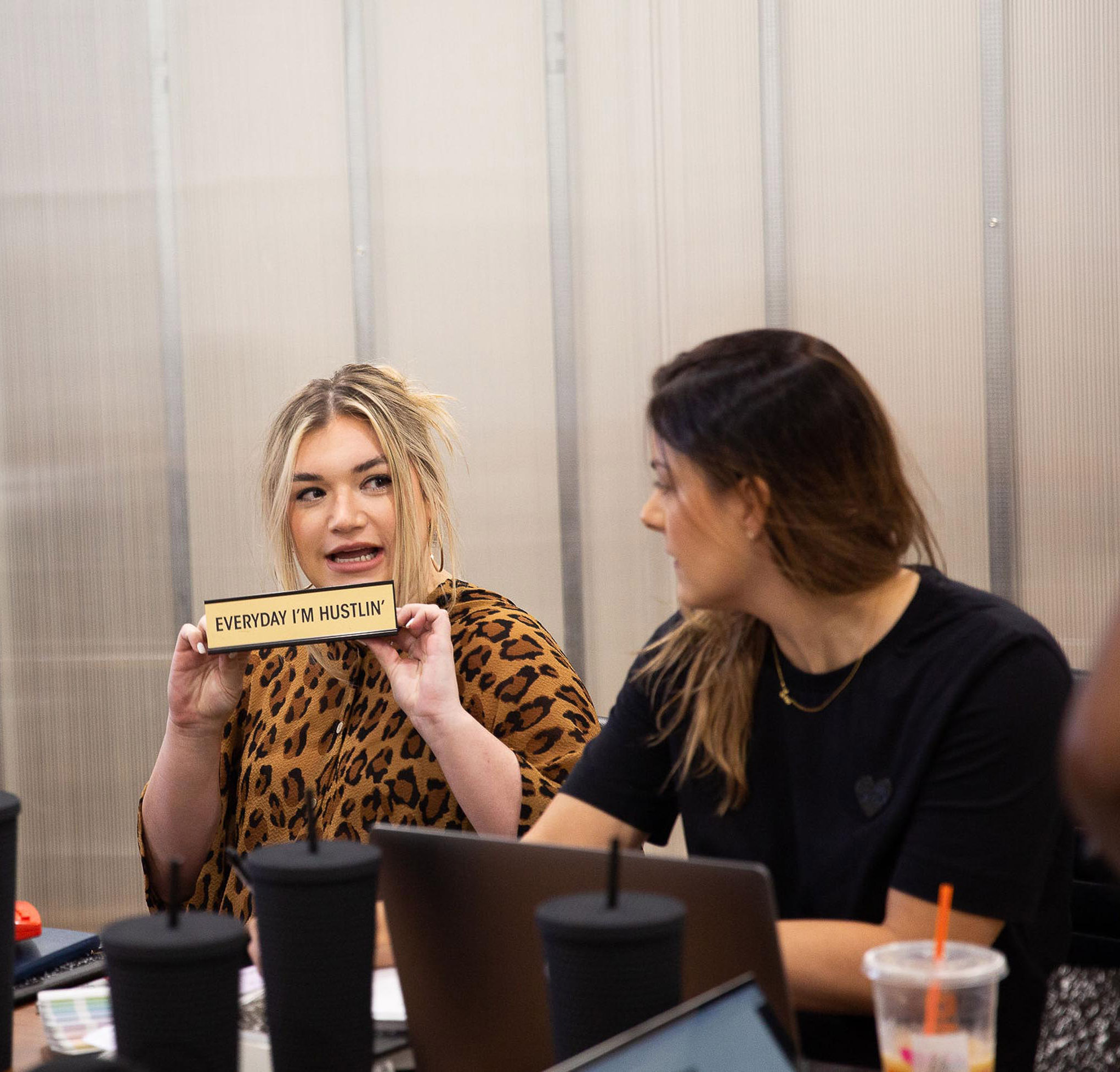
Five years later, she’s a Senior Designer. That doesn’t mean it clicked immediately. If anything, the early days were the opposite.
“What the f*ck have I gotten myself into.”
She laughs when she says it now, but she’s also honest about how steep the learning curve was. Looking back at her early work, she doesn’t try to defend it.
“I think, ‘good god… it’s crazy someone gave me a job.’”
But that’s part of it. You get better by doing the work, by being in it, by developing an eye over time. And for Allison, cultivating taste is one of her favorite challenges.
“What is elevated? What is luxury? What makes something desirable?” she asks herself.
There’s no fixed answer. It shifts, it’s subjective, and it’s something she’s still refining.
“It’s not hard to see bad design. But to spot really good design, that’s challenging.”
That challenge is part of what keeps the work interesting. So is the rhythm of it. She loves the genesis of a project, when everything is still open, when it’s all mood boards and concepts that could go anywhere. And she loves the satisfaction of the finished project, when everything is finalized and handed off to the client.
In between, like most designers, there are moments where her creativity gets stuck.
“When I’m really stuck or really frustrated I complain. I cry,” she laughs.
Then she resets. Steps away, comes back, pulls in other team members when she needs a fresh perspective. Or looks at her dog, Winnie (her “soul dog”), who has absolutely no awareness of deadlines and is doing just fine.
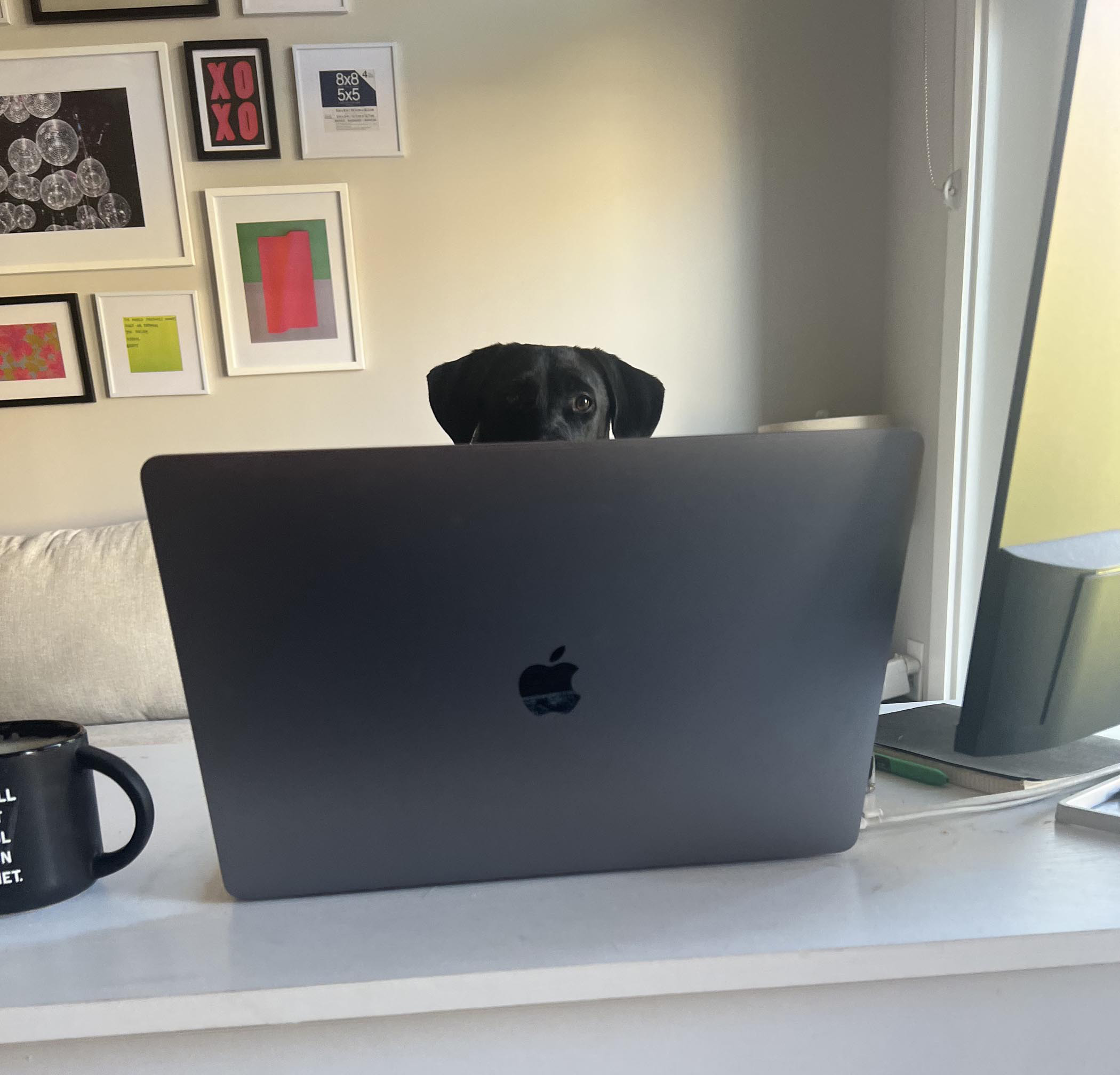
And then she keeps going.
“Somehow it works itself out.”
That mix of honesty and persistence is pretty consistent with how she shows up on a team too. When asked what she brings, she doesn’t default to her skills, titles, or degrees.
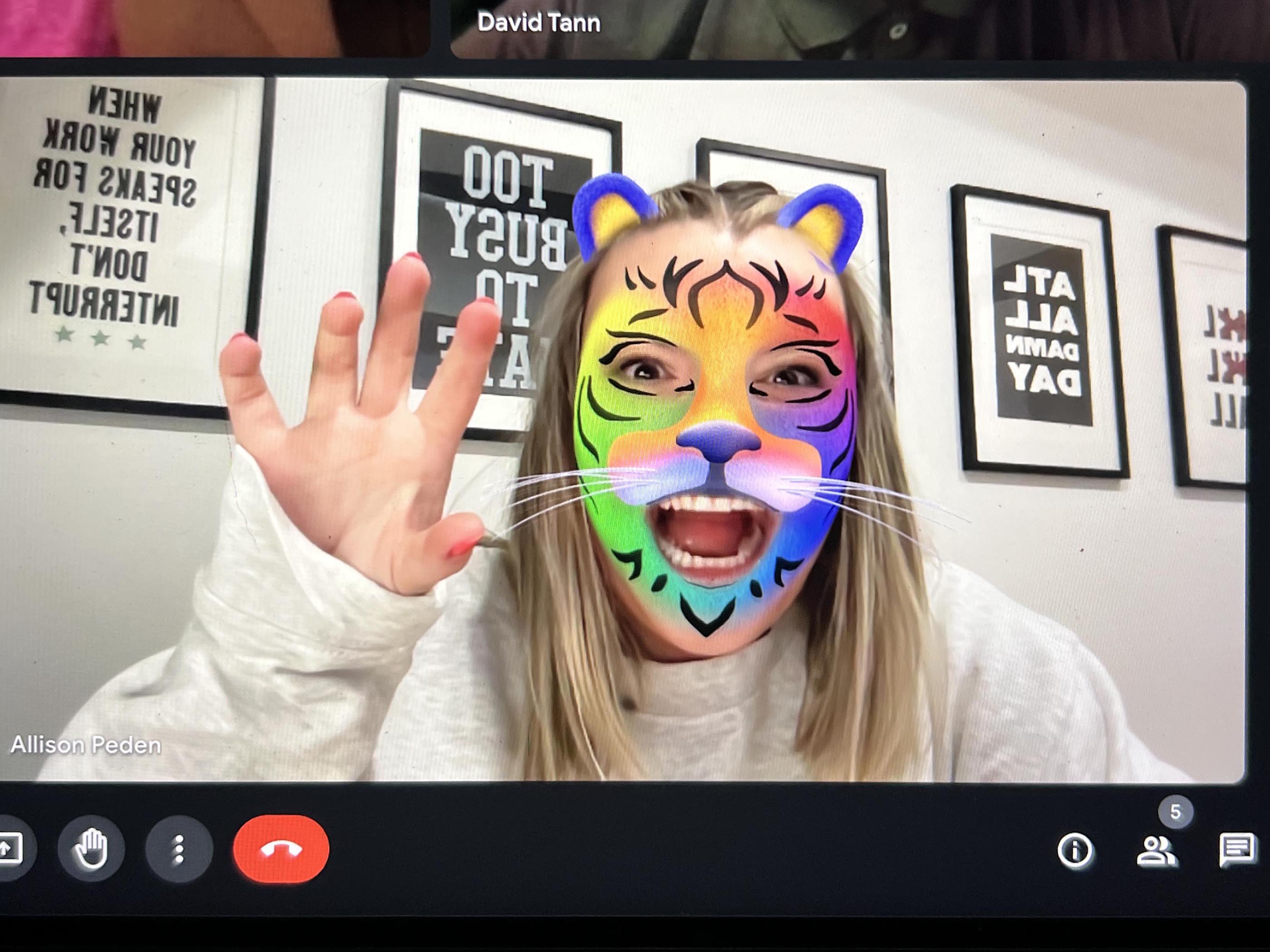
“I hope I bring positivity. And humor, even if the joke doesn’t land. I just want to leave things better whenever I can.”
And the Tantrum Team can vouch that she certainly does.
.png)